



Watches always show 10:10
Whether you are a seasoned horologist or a newcomer to the world of watches, one question has likely crossed your mind: Why, in almost every advertisement, are watches set to exactly 10 minutes past 10?
The truth is, this phenomenon is shrouded in myths and legends. Some claim 10:10 marks the exact moment WWI ended; however, history tells us the Great War officially ceased at 11:00 AM. Others point to the end of World War II, yet that official time was 5:10 AM.
It is fascinating how nearly every speculation links back to the World Wars. Another popular theory suggests 10:10 represents the exact moment the atomic bomb was dropped on Hiroshima, a pivotal turning point in 20th-century human history. The problem? “Little Boy” was actually detonated at precisely 8:15 AM.
It’s understandable why these popular answers are so dramatic; humans naturally prefer to fill their mental gaps with exciting narratives. However, history shouldn’t be sacrificed for the sake of a “good story.” The reality of the iconic 10:10 setting is far less mysterious.
The explanation for the fame of 10:10 can be summarized in just two concepts: Symmetry and Visual Balance.
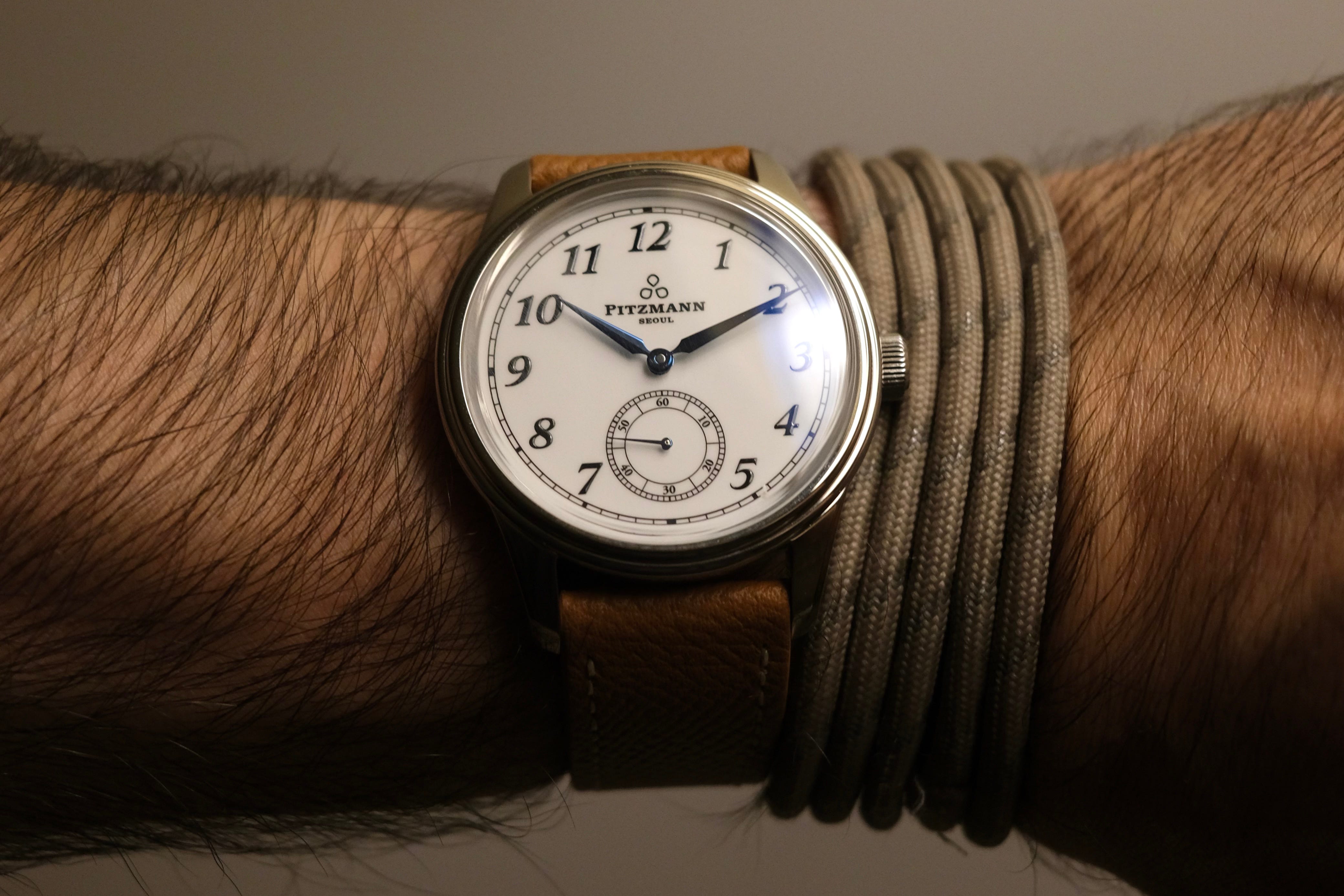
Pareidolia: the answer is easy
The real answer is surprisingly simple. In the vast majority of cases, advertisements, brochures, and marketing videos, watches show 10:10 because, in this position, the hour and minute hands do not obscure the logo (typically located below 12 o’clock) or the date window (usually at 3 or 6 o’clock). Furthermore, 10:10 creates a superior visual harmony; if you look closely, you have one broad hand (minutes) on the right, and two hands, one short and broad (hours) plus one long and thin (seconds), on the left. This balances the “visual weight” across the dial.
As a final note, a study published in 2017 claimed that audiences showed a higher preference for watches set at 10:10 compared to other times. Researchers attributed this positive reaction to Pareidolia, the human tendency to perceive familiar patterns (like a smiling face) in inanimate objects. By pointing upward, the hands at 10:10 create a subtle “V” shape or a “smile,” which is subconsciously more appealing than the downward “frown” of, say, 8:20.
I get it: I also wish the answer was more thrilling and legendary. But facts are facts, and it’s better to embrace reality.
This platform is awesome , thanks 🙏
As always it was precise and thanks for sharing your competent knowledge!